Worm has reached a meaningful milestone in his rehabilitation journey at APES Shelter.
When he first arrived, he required careful cleaning and supportive care. This week, our team successfully bathed him, gently removing dried urine and faeces from his coat. It was a delicate process that required patience, calm handling, and close monitoring.
A Fresh Start
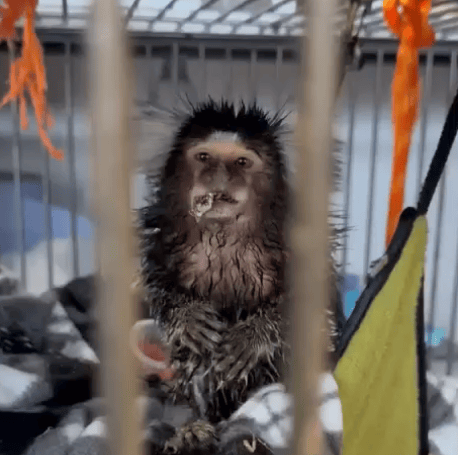
At first, Worm looked very sorry for himself.
Fresh from his bath, he resembled a tiny drowned rat and was not entirely impressed with us. Rehabilitation can be undignified at times, but cleanliness is essential for skin health, comfort, and recovery.
Why Hygiene Matters in Primate Rehabilitation
- Clean fur reduces the risk of skin infection
- It supports healthy temperature regulation
- It allows accurate health and behavioural assessment
- It restores dignity and comfort during recovery
Our position is clear. Best practice in primate rehabilitation requires thorough hygiene management delivered with compassion, structured oversight, and welfare first handling.
The Moment That Changed Everything
Then came a turning point.
Worm was offered his first Dubai roach since entering our care. His response was immediate. Curiosity returned. Energy lifted. Appetite is one of the strongest indicators of improving health in primates during rehabilitation, and seeing him engage so enthusiastically was a powerful moment for the team.
Comfort Restored
Once feeding was complete, it was time to dry off properly.
Worm quickly demonstrated just how comfortable he was feeling. Perhaps a little too comfortable if you ask us.
As you can see from the video below, he discovered the radiator and made himself entirely at home. Warmth plays a role in comfort and energy conservation for primates recovering from neglect. Controlled heating within a supervised environment supports wellbeing during early stages of care.
What This Means for Worm
- Strong appetite response
- Relaxed body posture
- Curiosity and engagement
- Comfort seeking behaviour
- Continued nutritional support
- Structured enrichment planning
- Routine health monitoring
- Behavioural assessment and social evaluation
Worm still has distance to travel in his recovery. Primate rehabilitation is a structured, carefully supervised process that focuses on both physical health and psychological stability.
Educational Note
Primates have complex behavioural, social, and environmental needs. Inadequate housing, poor hygiene, and inappropriate nutrition can quickly lead to distress, health complications, and behavioural suppression.
At APES Shelter, our rehabilitation approach prioritises dignity, enrichment, environmental stability, and welfare led handling practices. Responsible ownership of primates requires specialist knowledge, lawful compliance, and long term commitment.