Marmosets Are Not Low Maintenance Pets
Marmosets may be small primates, but their welfare needs are complex and demanding.
At APES Shelter, we regularly encounter cases where individuals underestimated the size, cost and daily commitment required to care for these animals properly.
Our position is clear. Keeping a marmoset is not occasional feeding and cleaning. It requires structure, planning and sustained daily engagement.
Legal Requirements in England
In England, all primates including marmosets now fall under the Animal Welfare Primate Licences Regulations.
From April 2026, anyone keeping a primate must hold a local authority licence or face prosecution.
The licensing system is designed to ensure welfare standards equivalent to those expected in specialist zoological collections.
This includes strict conditions relating to:
• Minimum enclosure size
• Environmental complexity
• Social housing
• Veterinary planning
• Feeding regimes
• Record keeping
Minimum Enclosure Size for Two Marmosets
Marmosets are callitrichids. Government guidance sets minimum enclosure sizes for two or three individuals at:
3 metres wide
4.5 metres long
3 metres high
These measurements represent usable space and are the starting point, not a luxury standard.
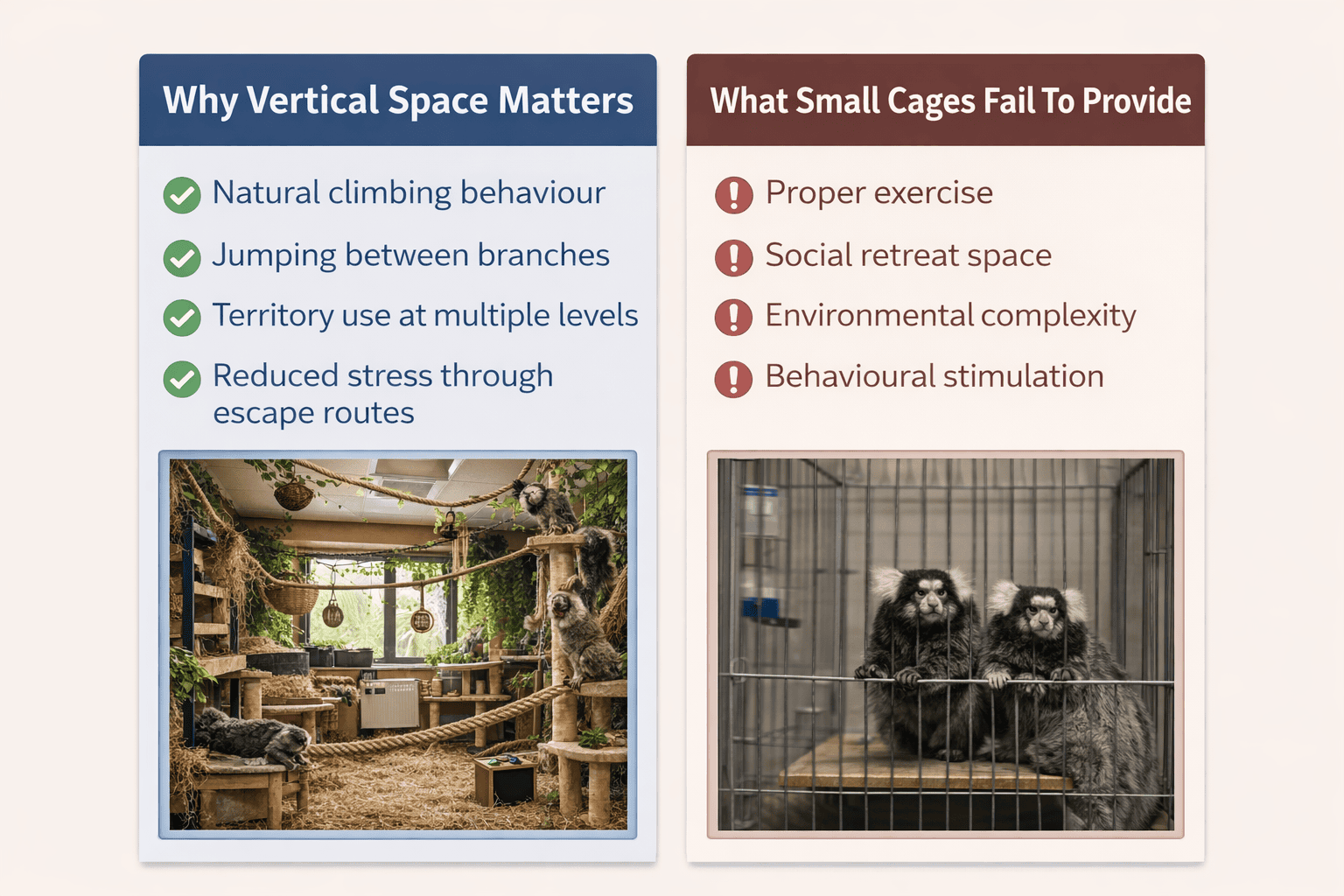
Height is critical. Marmosets are arboreal and depend on vertical movement for physical and psychological wellbeing.
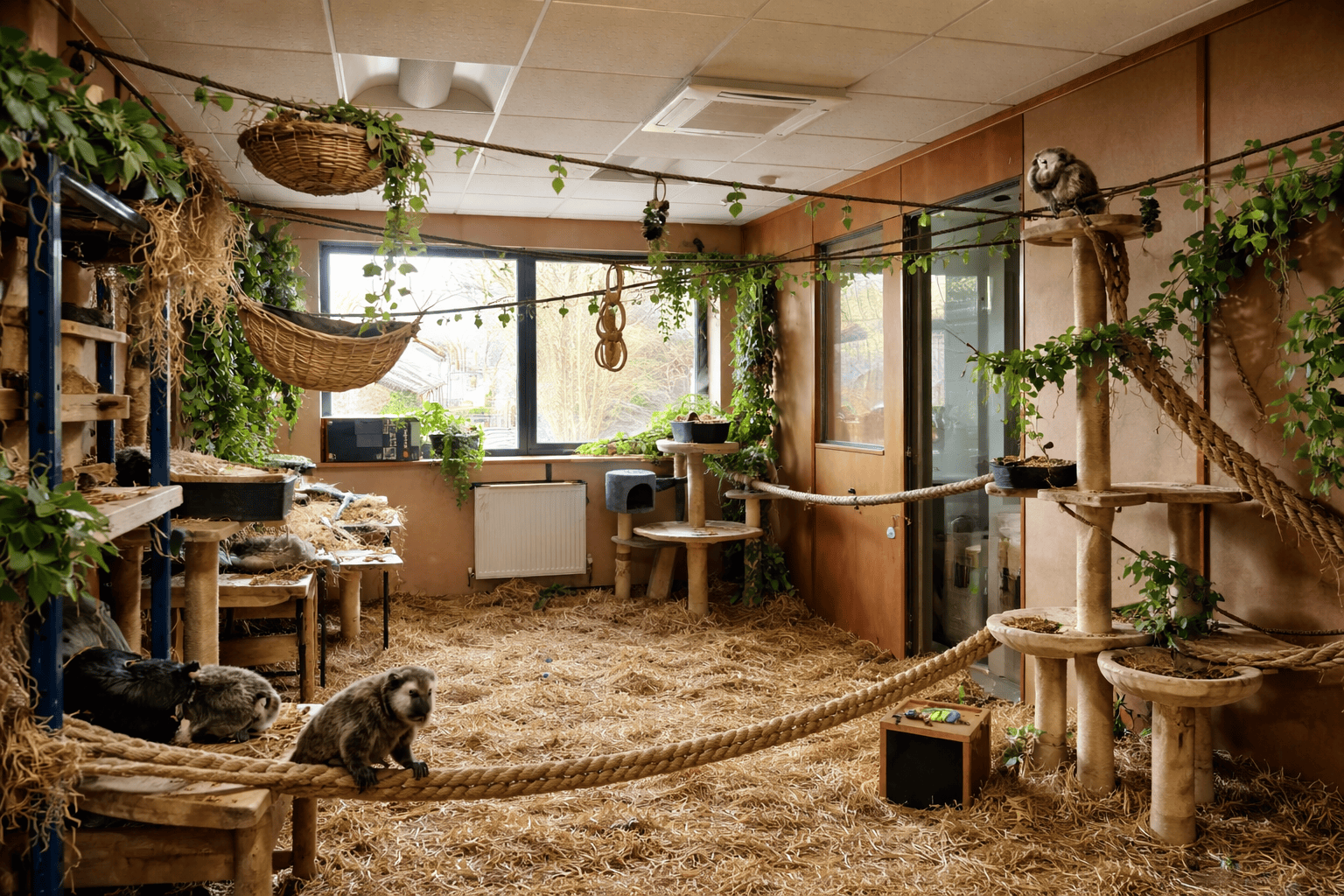
What a Complex Indoor Environment Can Look Like
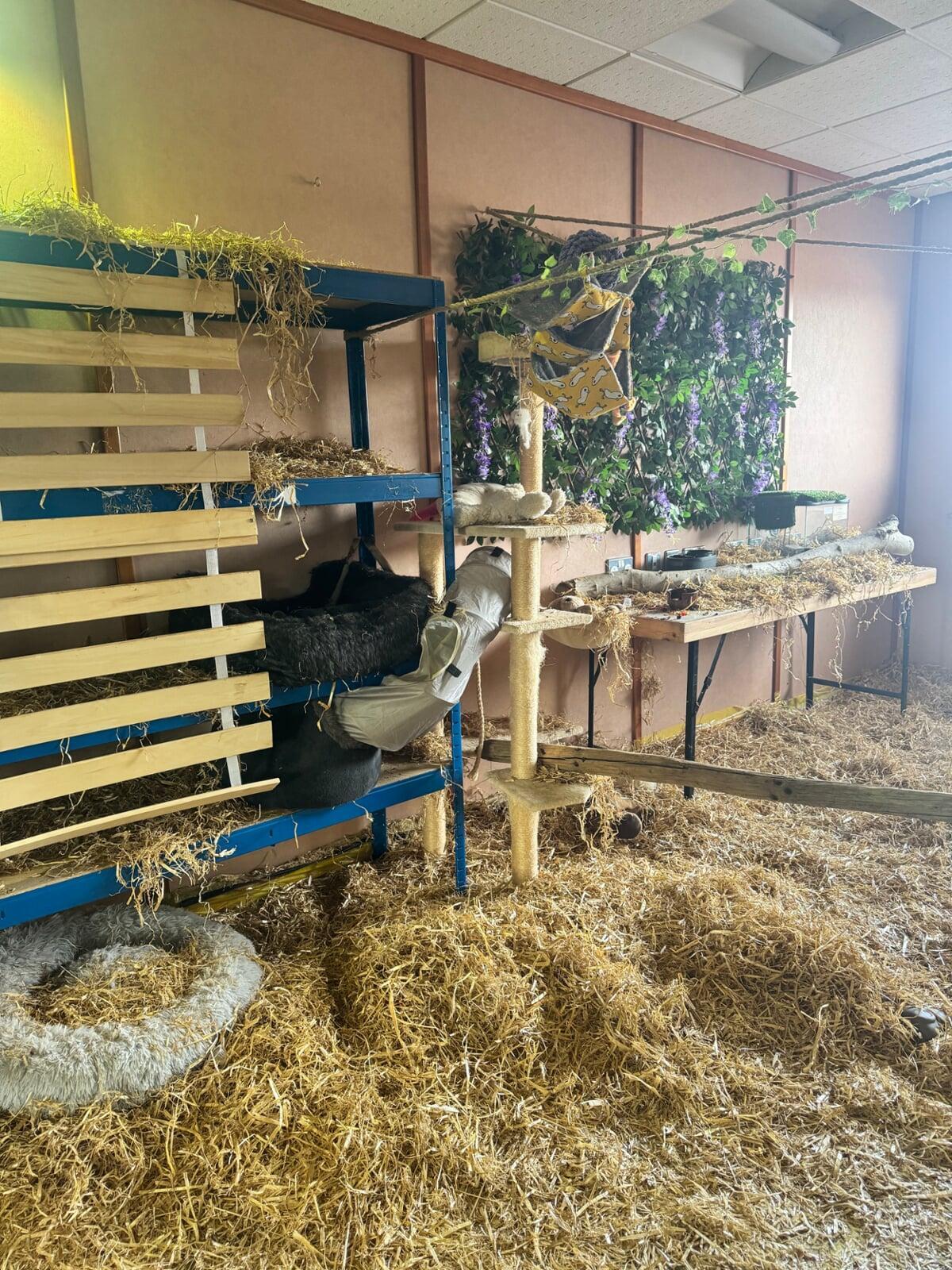
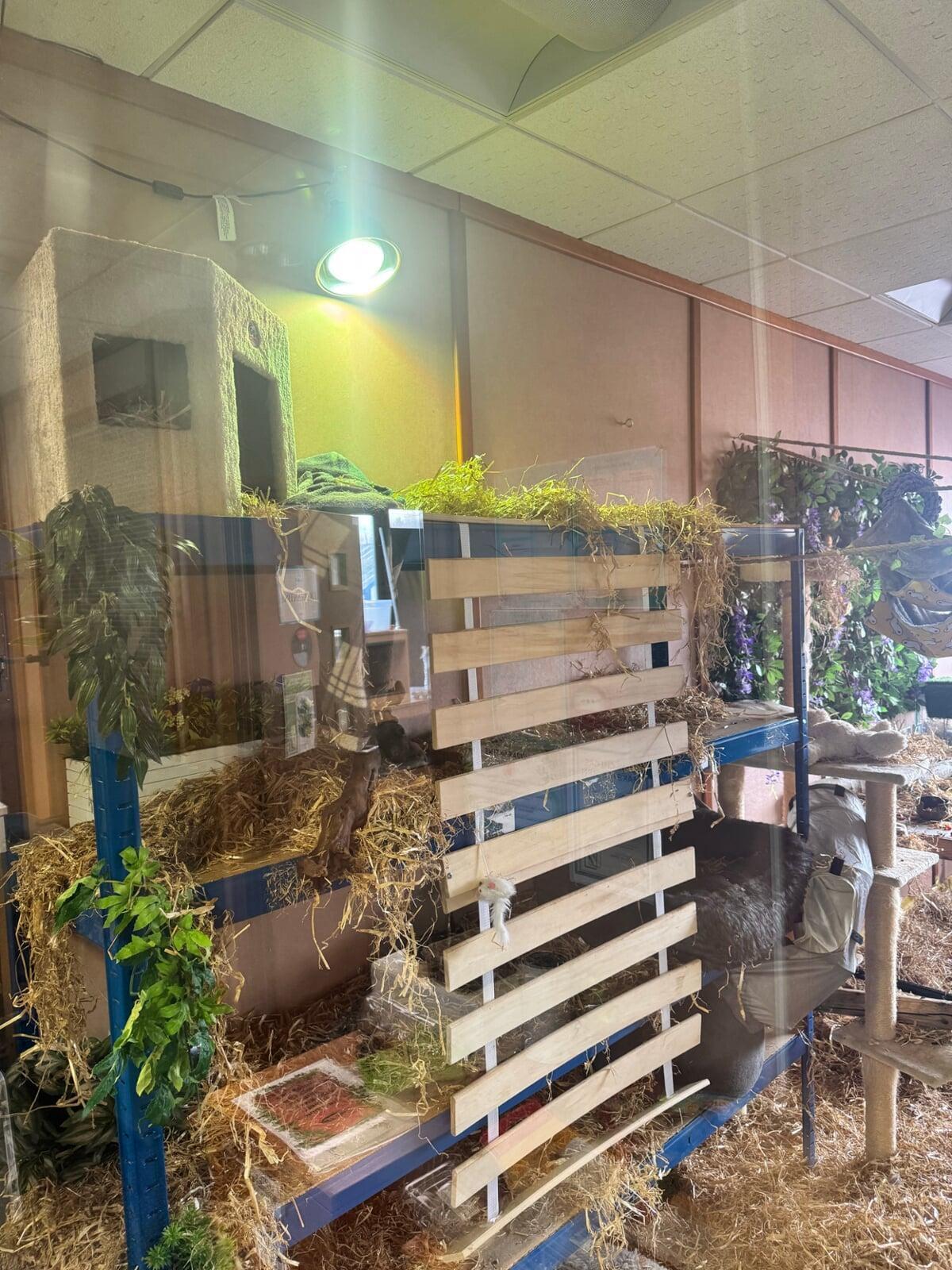
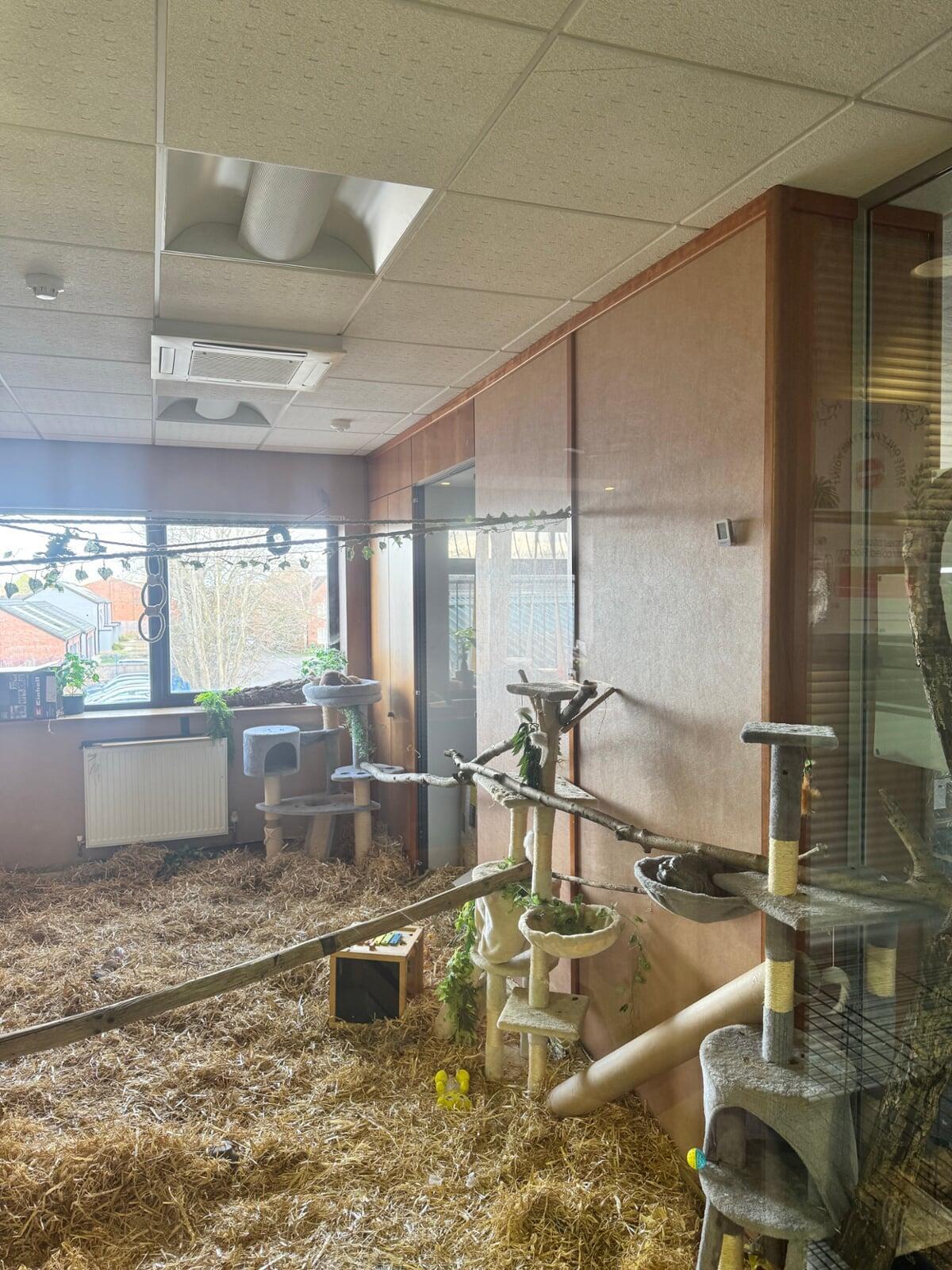
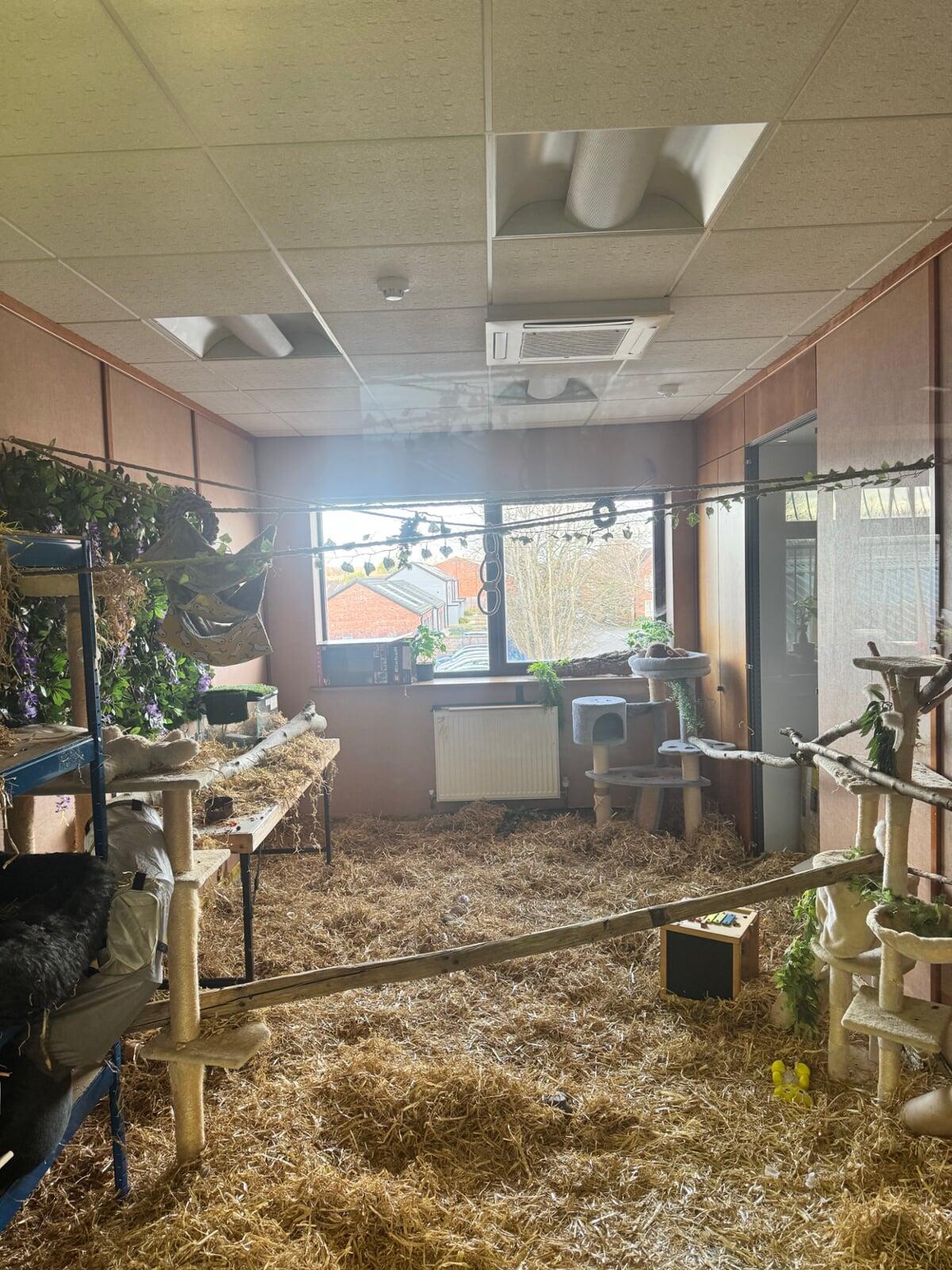
This enclosure is one of the dedicated indoor environments we currently provide for Hugo, and we hope in time it will also house Worm, our newest primate, as a carefully assessed companion. Social pairing is essential for marmoset welfare, and any introduction process must be gradual, structured and professionally managed to ensure compatibility and wellbeing.
When we move to our new premises, we will be developing a purpose built enclosure designed specifically for primate welfare. This will include increased vertical height, expanded usable space and secure outdoor access to allow natural light exposure and environmental enrichment opportunities. Our long term aim is to ensure that both Hugo and Worm are housed in a setting that not only meets licensing standards, but exceeds them in line with best practice for primate care.
Enrichment Is Essential Not Optional
Space alone does not guarantee welfare.
Marmosets require structured environmental enrichment that encourages natural behaviours including foraging, scent marking, climbing and social interaction.
Enclosures must include:
• Natural branches of varied diameter
• Ropes and suspended pathways
• Nest boxes and sleeping chambers
• Deep substrate for foraging
• Rotating enrichment items
• Safe planting or foliage simulation
Structured Feeding and Nutritional Planning
Feeding a marmoset is not a single morning task.
They require multiple feeds across the day to replicate natural foraging behaviour and to support metabolic health.
A balanced diet should include:
• Species specific formulated diets
• Fresh vegetables
• Controlled fruit portions
• Protein sources such as insects
• Vitamin D supplementation where appropriate
• Access to clean fresh water at all times
Improper nutrition can lead to serious health conditions including metabolic bone disease, obesity and immune dysfunction.
Social Structure and Emotional Wellbeing
Marmosets are highly social primates.
They should not be housed alone except under veterinary instruction. Pairs or stable family groups are essential for psychological wellbeing.
Isolation can lead to:
• Repetitive behaviours
• Depression like symptoms
• Self harm
• Aggression
Companionship is not enrichment. It is a fundamental welfare requirement.
The Daily Reality of Care
Keeping marmosets involves:
• Daily enclosure inspection
• Cleaning of high contact areas
• Monitoring social interactions
• Structured feeding schedules
• Enrichment rotation
• Health observation
• Veterinary access planning
This is not occasional maintenance. It is structured husbandry every day of the year.
Educational Summary
Marmoset Welfare in Brief
• Minimum enclosure size for two is 3 metres by 4.5 metres by 3 metres high
• Vertical climbing space is essential
• Social housing is mandatory
• Enrichment must be varied and ongoing
• Feeding requires structure and specialist planning
• A primate licence will be legally required
Our Position at APES Shelter & Rescue
APES advocates responsible ownership reform and stronger enforcement of exotic species welfare standards.
Marmosets are not novelty pets. They are intelligent primates with complex needs that very few private individuals can meet to an appropriate standard.
If you are considering acquiring a marmoset, we strongly encourage reviewing the legal framework and realistic care obligations before making that decision.